The Origin
Every dish begins
in the soil.
Before the wok, before the flame — there was a farm in Chiang Rai, a grandmother named Malee, and recipes written only in her hands.

A farm in Chiang Rai where the recipes were born
Three generations of the Siriporn family have grown galangal, lemongrass, and kaffir lime on the same terraced hillside outside Chiang Rai. The soil there is red-brown and mineral — the same color as the curry pastes it produces. Grandmother Malee Siriporn never wrote a recipe down. She said the proportions lived in her wrists.

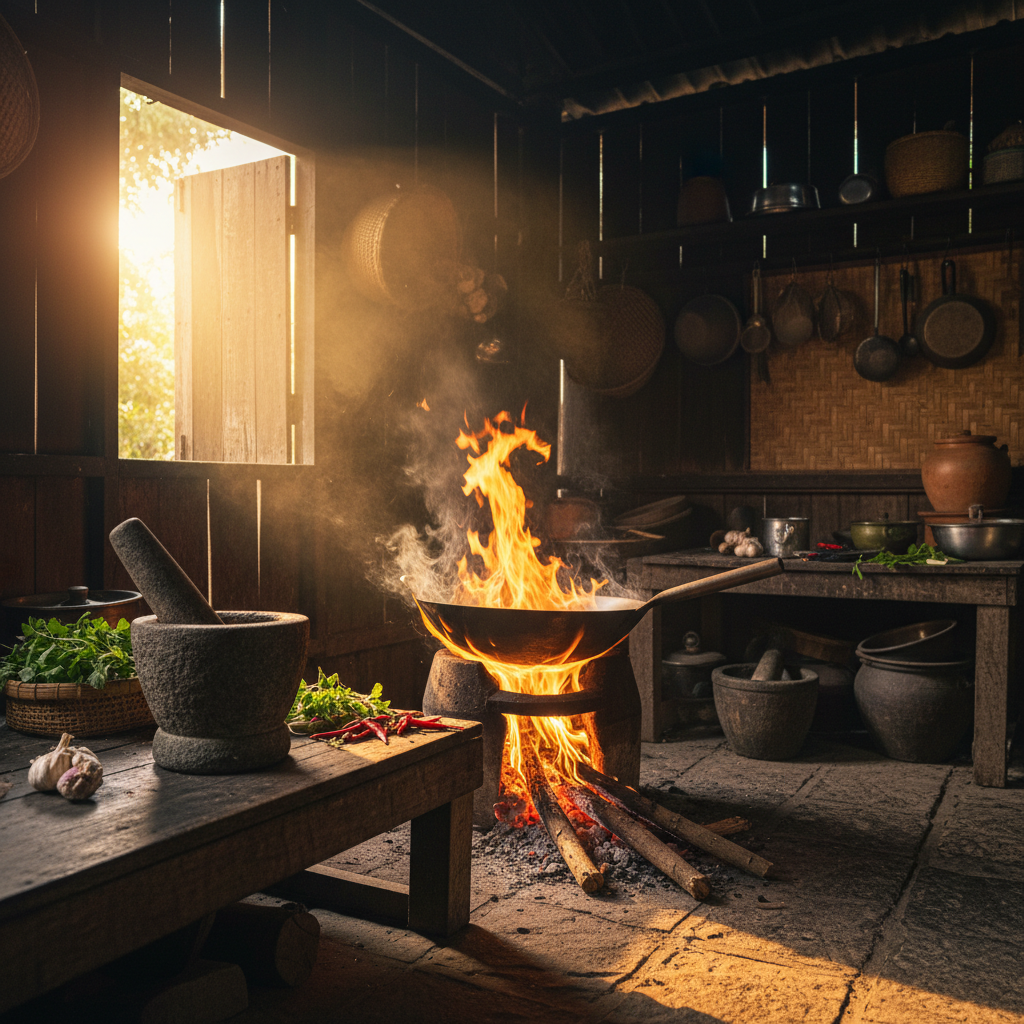
Malee's kitchen, where the mortar never rested
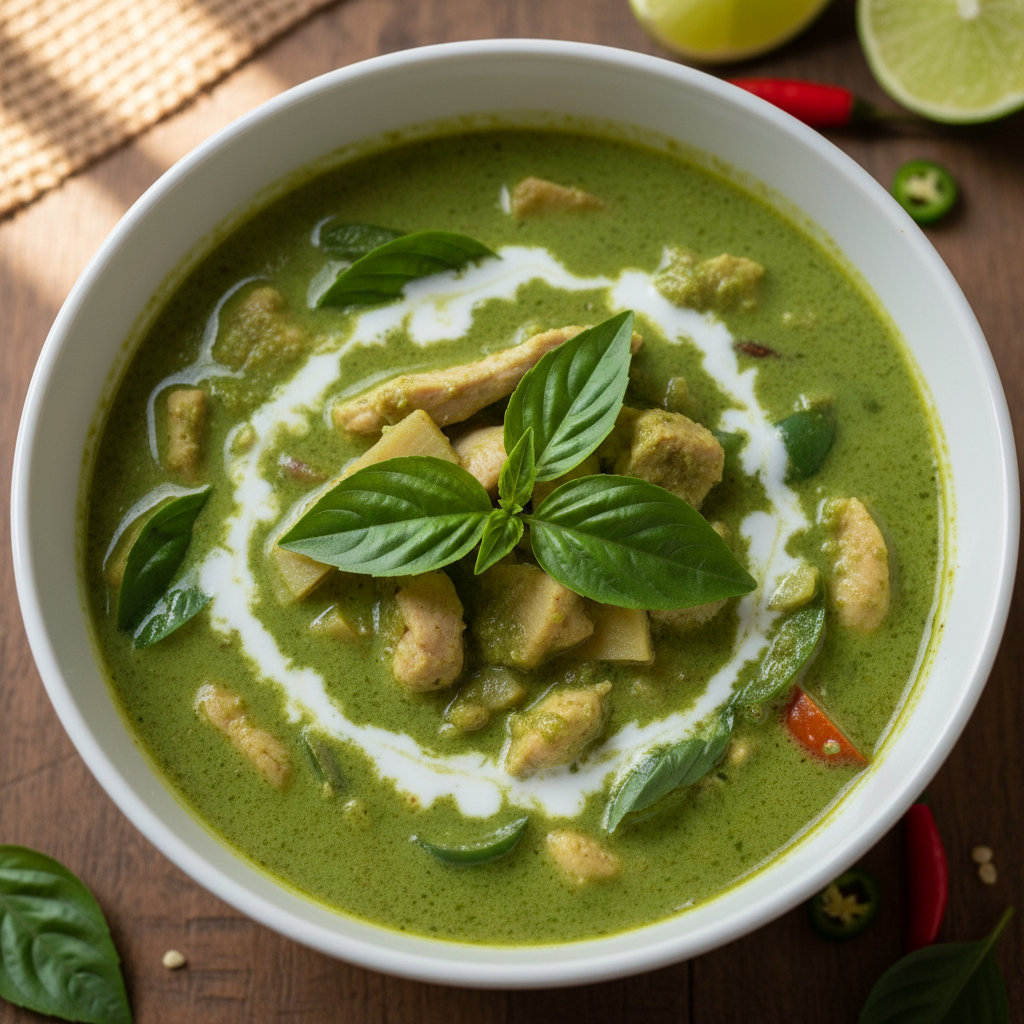
Every morning before sunrise, the stone mortar would sound across the courtyard — dried chilies first, then garlic, then shrimp paste fermented in a clay jar kept cool under the house. Malee's green curry paste required forty-five minutes of pounding. She said shortcuts were an insult to the ingredients. We still agree.

From Chiang Rai to a city kitchen, carrying everything
In 1994, Malee's daughter Nong arrived with two suitcases and a vacuum-sealed brick of dried chilies she'd smuggled through customs by calling them 'decorative peppers.' She found a basement kitchen in the Eastside, a secondhand wok, and three regulars by the end of her first week. The mortar she brought is still in use today.

The same recipes. The same hands. A different room.
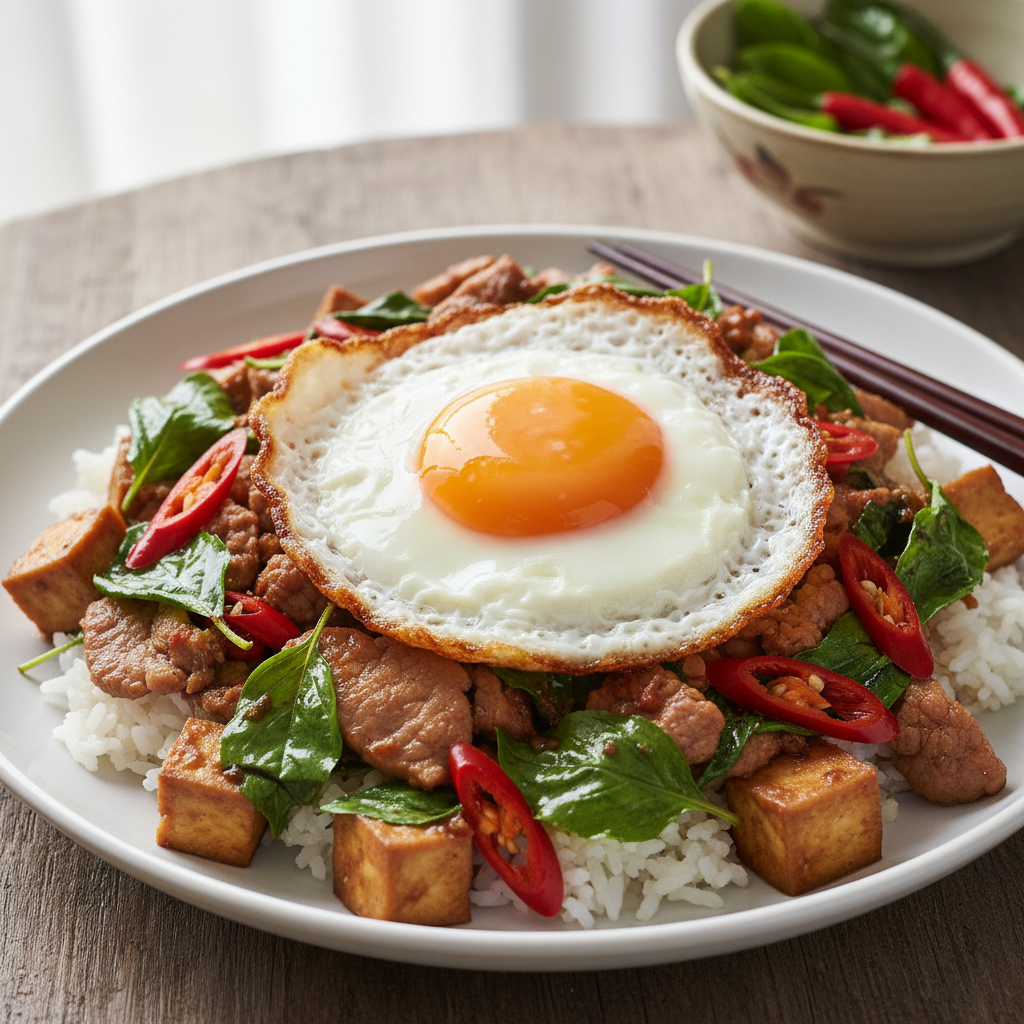
Krua — the Thai word for kitchen — opened its doors in 2009. Nong's daughter Ploy now runs the line, trained by her mother and her grandmother's memory. The lunch set changes with what came from the market. The pad kra pao is always on. The mortar is still dusty with dried chili by 8 a.m.